'Memories from worlds yet to be inhabited' collects the research from Hugo López

This website is being designed to minimise the energy consumption and CO2 emissions that result from navigating the internet. Know more.
The Atlantic Forest as an urban project:
forest–city relations from the perspective of a quilombo in Rio de Janeiro
Research proposal
Hugo López
In development
Proposed topic
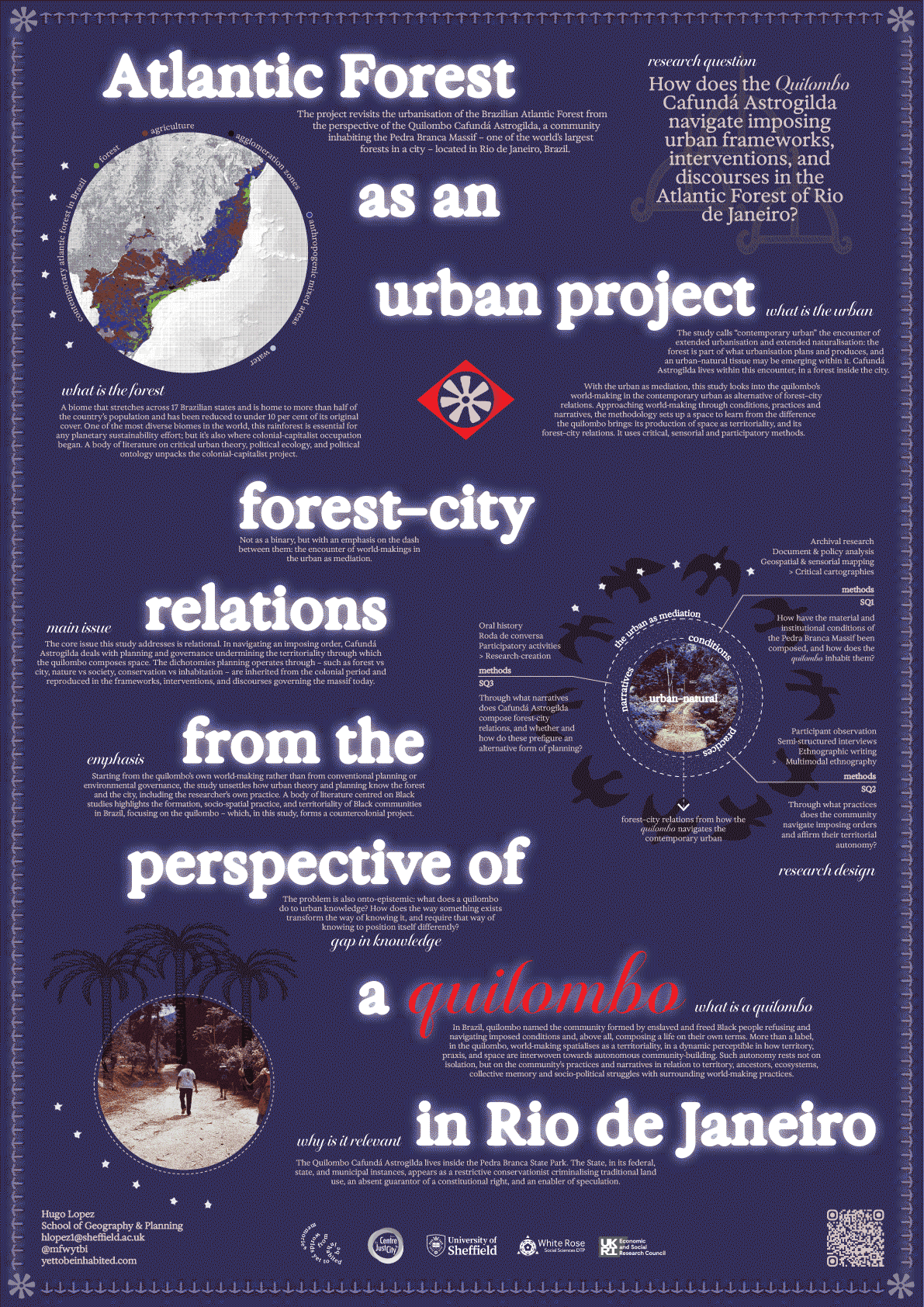
The project revisits the urbanisation of the Brazilian Atlantic Forest from the perspective of the Quilombo Cafundá Astrogilda, a community inhabiting the Pedra Branca Massif – one of the world's largest forests in a city – located in Rio de Janeiro. The research approaches forest–city relations from the quilombo's world-making, rather than from conventional urban planning or environmental governance, examining how Cafundá Astrogilda navigates a condition in which the forest is part of what urbanisation plans and produces (Monte-Mór, 2013b).
Drawing on Black studies, the study formulates world-making as the ongoing navigation – acts of refusal, negotiation, and composition – through which communities make their world in keeping with their modes of life (Bispo dos Santos, 2023a, 2023b; B. Nascimento, 2023; Ferdinand, 2022). In the quilombo, world-making spatialises as a territoriality, in a dynamic perceptible in how territory, praxis, and space are interwoven towards autonomous community-building (B. Nascimento, 2023; Smith et al., 2023). Such autonomy rests not on isolation, but on the community's practices and narratives in relation to territory, ancestors, ecosystems, collective memory and socio-political struggles with surrounding world-making practices (Bispo dos Santos, 2023a, 2023b; Escobar et al., 2024).
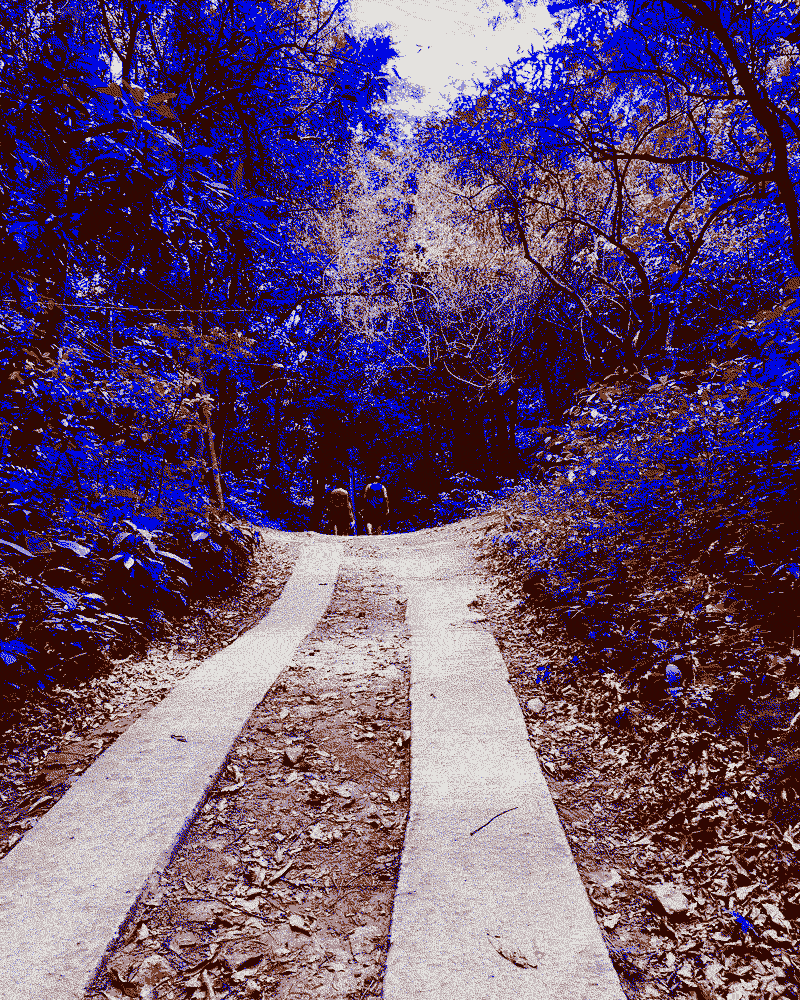
The core issue this study addresses is relational. In navigating an imposing order, Cafundá Astrogilda deals with planning and governance undermining the territoriality through which the community produces space (Dória, 2021; Ortiz, 2022). The dichotomies planning and governance operate through – for example, nature vs society and conservation vs inhabitation – are inherited from the colonial period and reproduced in the frameworks, interventions, and discourses governing the massif today (Escobar, 2016; Miraftab, 2017; Rocco, 2026). Among achievements and setbacks, this quilombola community deals with conservation management, real-estate pressure, and unresolved land-titling issues while enacting their territoriality within a full conservation-unit forest surrounded by the city (see Figure 1). Critical urban theory offers the study an account of how space is produced and how the urban extends beyond the city, shaping the conditions the community inhabits (Brenner & Schmid, 2015; Monte-Mór, 2013a). The study calls the contemporary urban this present encounter of extended urbanisation and extended naturalisation: the forest is part of what urbanisation plans and produces, and an urban–natural tissue may be emerging within it (Monte-Mór, 2013a, 2024). Cafundá Astrogilda lives within this encounter, in a forest inside the city. What remains to be explored is the community's production of space and territoriality in the contemporary urban, including its navigation (as refusal, negotiation, and composition) of forest–city relations.
The study draws on critical urban theory and Black studies to foreground the quilombo's own world-making/territoriality. Studying forest–city relations from this world-making/onto-epistemic is operationalised following a three-part framework attentive to the material infrastructures, spatial arrangements, and institutional settings the community inhabits (conditions), which are transformed in the practices through which it navigates them (practices), and the narratives that partake and design this world (narratives) (Escobar et al., 2024). Conditions, practices, and narratives structure the sub-questions, objectives, and methodological framework.